©Silvia De Rosa
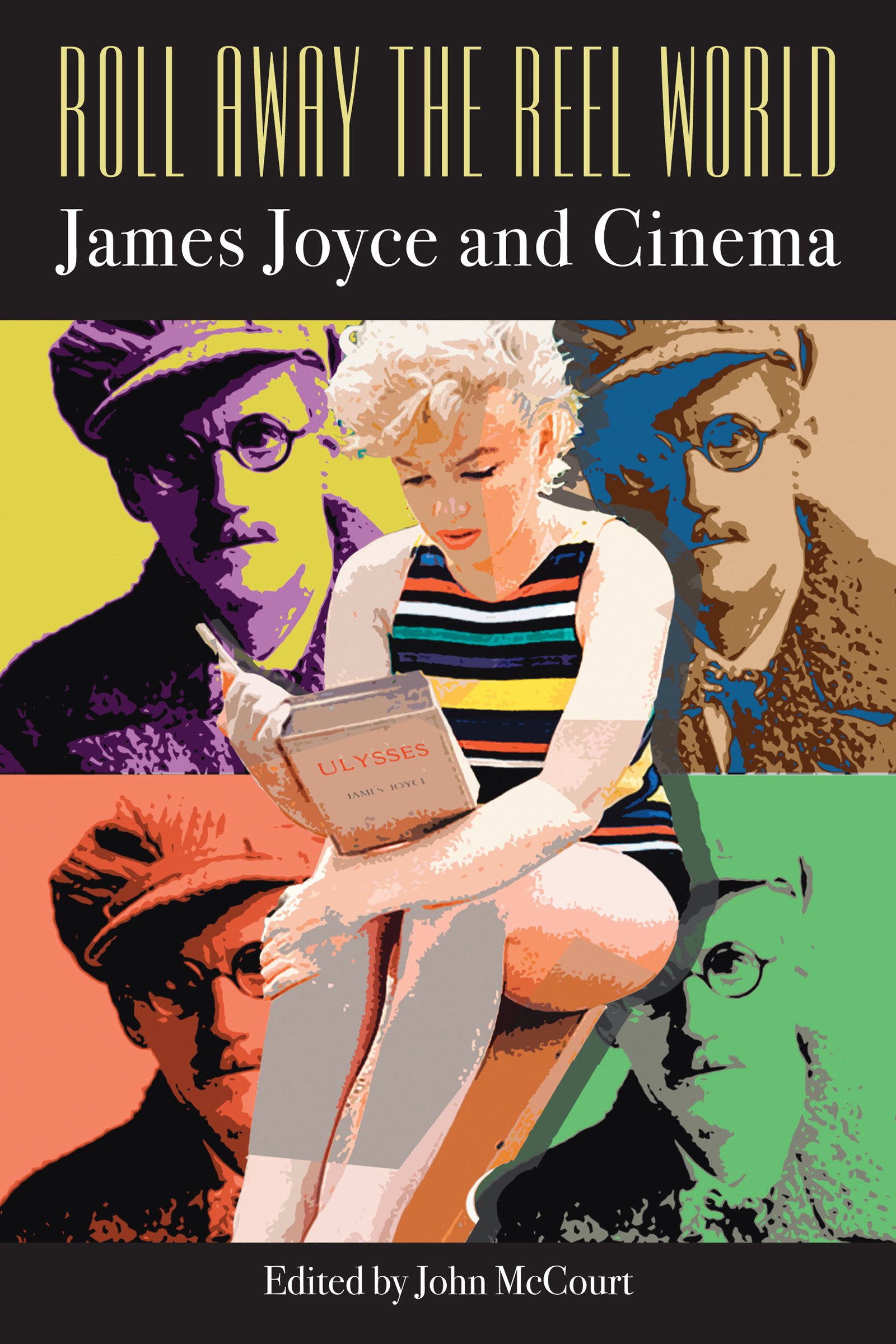
Traces Joyce's involvement in early modern cinema, his thematic and formal borrowing from this genre, and the impact of his writings on later avant-garde and mainstream cinema ranging from Godard to Rossellini to Scorsese.
Written by an international group of leading Joyce and film studies scholars, the first section of the book provides a revealing account of the writer's central involvement in 1909-10 in setting up the Volta cinema, the first specifically-designated cinematic space opened in Dublin.
The main body of the book traces aesthetic and structural links between Joyce and film, offering chapters on the birth of modern cinema as seen from Joyce's position in Trieste, a surprising vibrant "capital" of cinema, examining the impact on Joyce of early film makers such as the Lumière brothers, Cretinetti, and Meliès, and assessing the influence of Joyce's writings on contemporary film directors. The presence of Joyce's Ulysses is traced in films such as American Beauty (Mendes, 1999) and The Departed (Scorsese, 2006) while various film treatments of Joyce's work - such as John Huston's The Dead - are also analysed.
Contents
Introduction: From the real to the reel and back: explorations into Joyce and cinema
- John
McCourt
James Joyce and the Volta Programme by Luke McKernan;
Dedalus Among the Film Folk: Joyce and the
Cinema
Volta by Erik Schneider;
Joyce, Early Cinema and the Erotics of Everyday Life by Katherine Mullin;
The Ghost
Walks: Joyce and the Spectres of Silent Cinema by Maria DiBattista;
Mirages in the Lampglow: Joyce's
'Circe'
and Méliès' Dream Cinema by Philip Sicker;
Futurist Music Hall and Cinema by Carla
Marengo
Vaglio;
Circe's Costume Changes: Bloom, Fregoli and Early Cinema by Marco Camerani;
'See
Ourselves as Others
See Us': Cinematic Seeing and Being in Ulysses by Cleo Hanaway;
JJ/JLG Louis Armand;
Tracing
Joyce: 'The
Dead' in Huston and Rossellini by Kevin Barry;
Odysseys of Sound and Image: 'Cinematicity' and the
Ulysses
Adaptations by Keith Williams;
James Joyce, Subliminal Screenwriter? by Jesse Meyers;
Appendix :
Volta
Filmography by Luke McKernan
Margot Norris, Irish Studies Review 2011
"marvellous research and analysis that make this the most exciting work on Joyce and cinema to date"
Bernard O'Donoghue, Notes and Queries 2011
"McCourt's riveting and well conceived book is made up of three sections; the first (after the editor's
lively and elegant introduction) is made up of two short essays by Schneider on Joyce's collaborators,
following McKernan's account of the project's history. The second section has six essays on the
most crucial and interesting matter the reflection of cinematic techniques and themes in Joyce's writings,
linked to McKernan's
wondering whether he would have been drawn by subject matter or technique. One answer to this is given by
Louis Armand in his essay
on Jean-Luc Godard, the first of the four pieces in the third section which deals with ways that modern
film-makers have drawn on
Joyce. ... What this book demonstrates most illuminatingly is that criticism has often been looking in the
wrong place in trying to
locate the modernism of Ulysses in particular. We are reminded of Beckett's observation about
Finnegans Wake that it
is not about something: it is that thing itself. The form that the most technically challenging sections of
Ulysses take is
better seen in the context of cinematic futurism than in the history of the realist novel: it is not
possible to extricate in
McKernan's terms the matter of Circe from its technique. This book will remain an indispensible reminder of
that fact: a major
contribution to the understanding of Joyce."
Terence Killeen, Irish Times 2011
"The book as a whole is a thorough charting of Joyce's cinematic connections, beginning with a highly
informative account of the early programming of the Volta cinema venture by Luke McKernan and continuing
with a detailed account (the most detailed yet) of the entire Volta by that fine researcher
Erik Schneider. This collection is a thorough, in-depth contribution to a topic that is often approached
more sketchily, more
theoretically, in the bad sense of the word. ... Its title, Roll Away the Reel World (of course from
Finnegans Wake),
includes a reference to "rolls" of film, which are unrolled as a film is shown. This book also unrolls the
fascinating, complicated
relations between its two subjects."
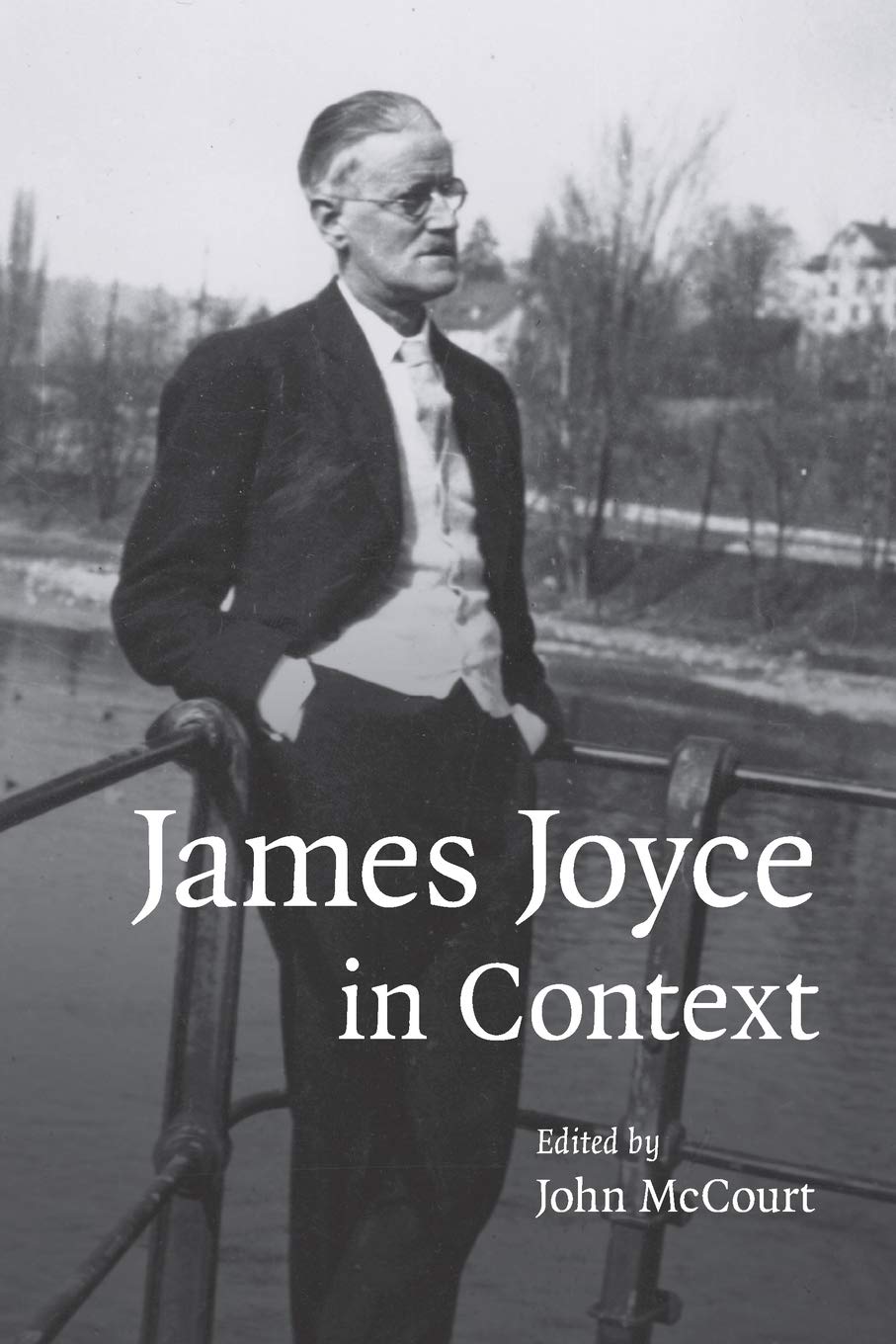
This collection of original, cohesive and concise essays charts the vital contextual backgrounds to Joyce's life and writing. The volume begins with a chronology of Joyce's publishing history, an analysis of his various biographies and a study of his many published and unpublished letters. It goes on to examine how his works were received in the main twentieth-century critical and theoretical schools. Most importantly, it places Joyce within multiple Irish, British and European contexts, providing a lively sense of the varied and changing world in which he lived, which formed him, and from which he wrote. The essays collectively show how Joyce was rooted in his times, how he is both a product and a critic of his multiple contexts, and how important he remains to the world of literature, criticism and culture.
Contents Preface; Part I. Life and Works: 1. Chronology of composition and publication of the major works - Stacey Herbert; 2. Joyce's lives, memoirs and biographies - Finn Fordham; 3. Letters - William S. Brockman; Part II. Theory and Critical Reception: 4. Prewar Joyce - John Nash; 5. Postwar Joyce - Joseph Brooker; 6. Structuralism, deconstruction, post-structuralism - Sam Slote; 7. Gender and sexuality - Marian Eide; 8. Psychoanalysis - Luke Thurston; 9. Post-colonialism - Gregory Castle; 10. Genetic criticism - Dirk van Hulle; 11. Translation studies - Jolanta Wawrzycka; 12. World literature and cosmopolitanism - Eric Bulson; 13. Twenty-first century critical contexts - Sean Latham; Part III. Historical and Cultural Context: 14. Being in Joyce's world - Cheryl Temple Herr; 15. Dublin - L. M. Cullen; 16. The Irish nineteenth century - Matthew Campbell; 17. The Irish revival - Clare Hutton; 18. The English literary tradition - Patrick Parrinder; 19. Paris - Jean-Michel Rabate; 20. Trieste - John McCourt; 21. Greek and Roman themes - Brian Arkins; 22. Medicine - Vike Martina Plock; 23. Modernisms - Michael Levenson; 24. Music - Timothy Martin; 25. Irish and European politics, nationalism, socialism, empire - Brian Caraher; 26. Newspapers and popular culture - R. Brandon Kershner; 27. Language and languages - Tim Conley; 28. Philosophy - Fran O'Rourke; 29. Religion - Geert Lernout; 30. Science - Mark Morrison; 31. Cinema - Maria di Battista; 32. Sex - Christine Froula; Further reading; Index.
"Featuring the contributions of thirty-two distinguished scholars of Joyce, Irish literature and history,
and modernism, James
Joyce in Context is an exemplary introduction to the many contextual influences on the author's career. Not
only does this study
succeed in elucidating Joyce's historical groundings for the present- day reader, but it departs from the
traditional biographical
study by focusing on Joyce scholarship as well as primary texts. In so doing, it consistently highlights the
contemporary
significance of Joyce's works, and by calling attention to scholarly areas that need further research, it
also aids in the
maintenance and development of Joyce criticism"
Christopher Devault (English Literature in
Transition, 1880-1920,
Volume 53, Number 4, 2010, pp. 513-516)
"The best introduction to James Joyce scholarship available, John McCourt's James Joyce in Context
draws together thirty
two essays that frame the author's works biographically, critically, and historically. Its impressive
variety of perspectives makes
reading it feel like walking into a massive, bustling Joyce symposium where, as our luck would have it,
every talk attended is a
plenary--a conference of keynotes. This is due, surely, to John McCourt's singular editorial vision, which
led him to include essays
from the best scholars on issues ranging from sex to medicine, Paris to the 'Post-war Joyce',
post-colonialism to religion. The book
is a landmark equalling McCourt's previous success, The Years of Bloom: Joyce in Trieste 1904-1920,
which helped
revolutionise the way we approach Ulysses. This collection will change the way we introduce ourselves and
each other to the
contemporary field of Joyce Studies.
Billed as a companion volume to The Cambridge Companion to
James Joyce (2004),
McCourt's book surpasses its predecessor and sets a standard for literary contextualizing collections
generally."
Spurgeon
Thompson, Irish University Review: a journal of Irish Studies, March 22, 2010
The 'Trieste Joyce School', organised by Trieste University, has been a success since its founding in 1996, and will celebrate its 12th year in 2008. During this period, the School has brought more than 1000 students and about 150 Joyce specialists and other scholars from all over the world to Trieste. In 2007, the monograph series 'Joyciana' (ed. Claudia Corti and Renzo S. Crivelli, published by Pacini Editore, Florence-Pisa) was launched under the aegis of the 'Trieste Joyce School'. Inspired by the eminent Italian English literature specialist and enthusiastic supporter of the School, Agostino Lombardo, whose recent death unfortunately did not permit him to bring his project to conclusion, in 2007 the series produced its first volumes Esuli: Dramma, psicodramma, melodramma (Exiles: Drama, Psychodrama, Melodrama) by Claudia Corti, and Foglie triestine: Giacomo Joyce (Triestine Leaves: Giacomo Joyce) by Lia Guerra. The intention is to publish two volumes annually, one in Spring and one in Autumn. In fact, the monograph Joyce Gotico, by Laura Pelaschiar, will appear in Spring, 2008. The series is open to both Italian and foreign Joyceans, and to young scholars in particular.
Contemporary Irish Literature (Carocci Editore, 2007, Rome) covers a period of about 70 years, from the end of the 1940's, when the Irish Republic was formed, to the present. The book is divided into five sections: the southern Irish novel, the northern Irish novel, Poetry, Theatre and, finally, the Short Story, which constitutes a fundamental Irish literary form. The southern Irish novel is analysed by Roberta Gefter Wondrich, who begins with the literary renewal of the 1960's and then moves forwards to the New Irish Renaissance of the 1990's, which she defines as an 'experimental tradition' that takes into account a new realism and a linguistic research typical of Post-modernism. The narrative of the Irish Republic develops from the psychological introspection of the 1950's towards an increasingly diffused reaction to a rural culture dominated by the Catholic Church and the reactionary closure of peasant society. In the works of writers such as Edna O'Brien, John Banville and Colm Toibin, this reaction leads to a reinterpretation of Irish history through a rereading of the tradition. The northern Irish novel is examined by Laura Pelaschiar who, through her reading of authors such as Eugene McCabe, Jennifer Johnston, Briege Duffaud, Bernard MacLaverty and Robert McLiam Wilson, shows that this literary current not only represents a 'nation' which, for both Catholics and Protestants alike, has experienced the contradictions of English cultural and economic domination for centuries but which, in expanding its own literary perspectives and treatment, ultimately becomes a metaphor for a 'globalised' history of repression and suffering, thereby acquiring a universal character. A special section is devoted to the so-called 'Troubles Thriller' (or 'Troubles Fiction'), a new literary genre which, through a sort of 'aesthetics of violence', expresses the viewpoint of a people marginalised by History. The chapter on Poetry is by Renzo S. Crivelli who, taking his departure from the tradition of Yeats and Joyce, examines 70 years of Irish poetic production, both North and South, a geographical and social division which presents a profound convergence when dealing with the 'Troubles'. From Austin Clarke to Patrick Kavanagh, John Montague to Nobel Prize winner Seamus Heaney, Derek Mahon to Michael Longley, contemporary Irish poetry has proven itself to be extremely vital and incisive, while the images of horror connected to the Troubles has moved beyond the references to Civil War to a metaphysical space capable of reflecting universal human suffering. Crivelli dedicates a significant portion of his essay to women writers (Eavan Boland, Eilean Ni Chuilleanáin, Sarah Berkeley and Medbh MacGuckian), and describes the evolution in self-representation by women poets after the movements of the 1980's. Special attention is given to the new and interesting phenomenon of women's Irish language poetry, which challenges the submissive view of women in the Irish tradition (re de Valera's famous speech) and creates new spaces for dialogue with the dominant male vision, in the context of a renewed female emancipation. The major significance of contemporary Irish Theatre is underscored by Fiorenzo Fantaccini, who begins with the rebirth of the Abbey and Belfast Lyric Theatres after 20 years of obscurantism and censorship and moves on to examine the works of playwrights such as Brian Friel in the North (influenced by Cechov) and Thomas Kilroy, Tom Murphy and Sebastian Barry in the South, writers who have brought to the stage contemporary Irish issues such as emigration, the loss of identity and the break-up of the family, in a context (also linguistic) of marginalisation. In the fifth and final section, Silvia De Rosa examines the Irish Short Story, a form which thanks to its ability to narrate in a private and intimate way the microcosm of rural culture and the minimalist lives of common people, is innate to Irish literature as a whole. Taking her departure from the generation of the so-called 'Three O's' (O'Faolain, O'Connor, O'Flaherty) De Rosa analyses more recent authors such as Benedict Kiely, Gerry Adams and David Park, with a special section dedicated to the father of the Irish Short Story and author of numerous short story collections: William Trevor. In her view, the Irish short story begins to change in the 1980's with writers such as Evelyn Conlon, Claire Boylan and Mary Morissy, who shifted the focus from the customary rural settings towards the psychological analysis of relations between the sexes, also in the context of the family. Authors such Aidan Mathews, Michael Collins and John McKenna prefer new urban settings for their stories, and treat issues typical of the world of adolescence, such as sexual emancipation and drugs. Letteratura Irlandese Contemporanea, which is the first study of its kind in Italy (and perhaps in the English-speaking world as well), is a clearly written and useful reference work. It its extremely informative, has an excellent analytical index of authors and titles, and provides an extensive bibliography which is divided into both general and specific topics. It is intended for both the specialist in Irish studies and university students in general, as well as the many devoted readers of Irish literature in Italy, who for years have read with love and attention the dozens of Irish works translated by major Italian publishers.
L'eccezionale fioritura di autori irlandesi negli ultimi vent'anni ha imposto all'attenzione di critica e pubblico un numero assai vasto di scrittori. In Italia, inoltre, per ragioni di affinità culturale, si è assistito di recente a un vero boom editoriale di romanzieri e poeti irlandesi. Ecco dunque la necessità di fornire a studiosi, studenti universitari e appassionati una storia della letteratura irlandese a partire dalla nascita della Repubblica d'Irlanda, insistendo dunque sulla contemporaneità. Il libro, che si avvale di una vasta bibliografia utilissima a chi si interessi di studi specifici, spazia nelle sue cinque ripartizioni ‐ romanzo del Sud, romanzo del Nord, poesia, teatro, short story ‐ fino a fornire una visione d'insieme della produzione letteraria irlandese dal 1940 ai giorni nostri. Oltre a un'accurata presentazione degli autori principali, il volume offre una ricostruzione, coagulata intorno ad alcune "isole" tematiche, dei movimenti culturali di maggior rilievo, coniugando indagine critica e informazione con scientificità e accuratezza.
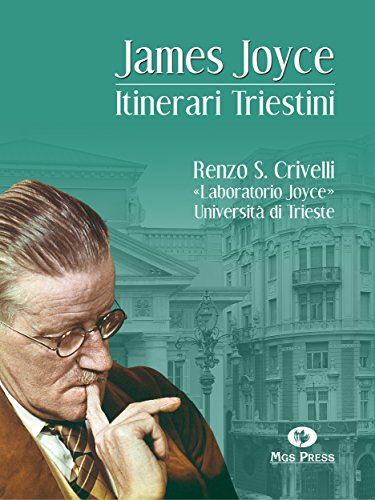
Questo libro ricostruisce gli anni triestini di Joyce, dal 1904 al 1915 e dal 1919 al 1920, così cruciali per la sua crescita letteraria, avvalendosi anche di inedite testimonianze, di documenti, di nuove verifiche anagrafiche e catastali, e si pone come un utile strumento di visitazione dei luoghi più rilevanti della quotidianità, del lavoro, delle relazioni sociali e "ludiche" del grande scrittore. Cartine, mappe, percorsi sono tracciati in una geografia reale ‐ ma anche spirituale ‐ ad uso dell'appassionato che cerchi un'immedesimazione emotiva nella Trieste di inizio secolo, dove è stato ultimato Dedalus, è stato scritto il dramma Esuli, è stato concepito l'Ulisse e dove ha visto la luce il poemetto in prosa Giacomo Joyce, l'unico testo joyciano di ambientazione locale.
In reconstructing Joyce's Triestine years, 1904-1915 and 1919-1920, so crucial to his literary growth, this book also avails of unpublished sources, of documents, of newly-checked data from the registry offices, and offers itself as a useful guide to the places most relevant to the great writer's daily life, his work, his social and "recreational" relationships. Maps and routes trace a geography at once physical and spiritual to help the interested party in his search for an emotional self-identification with the Trieste of the beginning of this century, the Trieste where A Portrait of the Artist as a Young Man was finished, the play Exiles was written, Ulysses was conceived, and the prose-poem Giacomo Joyce first saw the light, the only Joycean work set in Trieste.
"This book contains the fullest account so far available of Joyce's years in Trieste […].The value of this book is not just biographical: Joyce did write about places other than Dublin and in particular he wrote about places in Trieste. Particularly welcome in this connection are the many photographs of old Trieste in this volume, photographs which bring into sharp focus the context in which the artist continued to develop and Ulysses was begun". (Terence Killeen, The Irish Times, 1.3.97).
"James Joyce: Triestine Itineraries is an ideal guide for any cultural tourist following in Joyce's steps. The book, written in both Italian and English, provides a detailed recostruction of Joyce's life in this border city from 1904 to 1915 and from 1919 to 1920, illustrated with maps and photos of the most significant places associated with him". (European Bookseller, no 19, December 1996).
"In Crivelli's work the city of Trieste is never taken for granted. Crivelli's love for Trieste and its history emerges from nearly every page of his James Joyce: Triestine Itineraries, as well as his interest in architecture, which gives the accurate and detailed reconstruction of the maps of of Joyce's Trieste the flavour of maps of memory. […] The merit of this book, besides the quantity of either new or newly arranged material, lies mainly in its capacity to recapture the setting of a crucial period of Joyce's life and to make his ambivalent relationships with Trieste and its people forcefully emerge". (Review by Rosa Maria Bollettieri Bosinelli, The James Joyce Literary Supplement, Spring 1998).
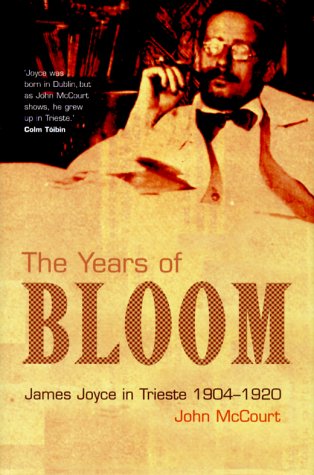
'McCourt has opened a whole new vista on Ulysses. No other critic or biographer has so clearly
identified the cosmopolitan, indeed, the Oriental, aspects of Joyce's great symphony of cities. .... His
book is a revelation.'
- John Banville, The New York Review of Books
Since the publication of Richard Ellmann's James Joyce in 1959, Joyce has received remarkably little biographical attention. The Years of Bloom, based on extensive scrutiny of previously unused sources and informed by the author's intimate knowledge of the culture and dialect of Trieste, is possibly the most important work of Joyce biography since Ellmann, re-creating this fertile period in Joyce's life with an extraoridinary richness of detail and depth of understanding. Now available in paperback.
'The Years of Bloom is an engaging, readable, and meticulous study. By scrutinising unpublished material and undertaking an elaborate survey of local sources McCourt has added much to our sum of knowledge about Joyce. More importantly, he has enriched our reading of Joyce's works ... this absorbing book encourages us to expand the contexts in which we engage with Joyce's fiction.' - Anne Fogarty, The Irish Times
'John McCourt brings to his task a uniquely rich and balanced sense of the real city inhabited by Joyce and the remembered city about which he was always writing. Joyce is given to us in this book in the kind of loving detail his talent deserves, though without papering over his often reprehensible behaviour and character.' - Bruce Arnold, Irish Independent
'John McCourt has lived and worked in Trieste for the past 10 years. His researches into its life, and the politics of the intensely interesting period when it was the major Austro-Hungarian seaport in the Mediterranean, have yielded a rich and well-told narrative.' - Daily Telegraph
'John McCourt's book is a must for all Joyce scholars, but it will interest and entertain many common readers as well.' - Masolino D'Amico, Times Literary Supplement
'One of the many delights of McCourt's book is the way he makes creative curiosity a literary imperative in the Irishman's self-exiled life. ...McCourt is even in judgement, generous in opin-ion, and wonderfully informative about events and attitudes in Europe a century ago.' - Hayden Murphy, The Herald
'McCourt's excellent local knowledge of Trieste is documented to great effect in The Years of Bloom. It provides a compelling case for re-evaluating the importance of Trieste for Joyce's work by relating his artistic development to the cosmopolitan life of the city.' - John Nash, Sunday Business Post
'This book changes our entire view of Joyce's Trieste. It establishes the city as a vibrant crossroads of cultures, languages and religions. Joyce was born in Dublin, but as McCourt shows, he grew up in Trieste.' - Colm Toibin
'The Years of Bloom is a fundamental contribution to the study of Joyce's life and work, presenting it in a largely new light. The outstanding feature of the work is McCourt's ability to see all the background material that he has unearthed in Trieste as a major contributory element in Joyce's creative faculty. The publication of The Years of Bloom is an extremely important cultural event.' - Giorgio Melchiori
'As an Irish scholar living in Trieste, McCourt has uncovered a wealth of information on Joyce that others have missed. McCourt's detailed study of Joyce's life in Trieste illuminates the creative process that informed his work during this crucial period when Joyce came to maturity as a writer.' - Michael Patrick Gillespie.
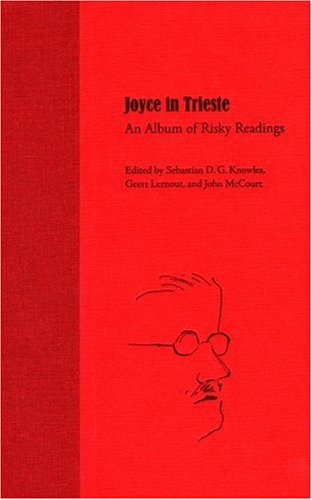
"An exceptionally rewarding collection of essays. Rather than rounding up the usual suspects, the editors
have
assembled an unusually broad and varied group of contributors to represent the current state of Joyce
criticism worldwide."
--R. Brandon Kershner, University of Florida
Joyce in Trieste is a record of the transformation in text, meaning, and language that Trieste worked upon Joyce. Based on presentations from the Trieste Symposium of 2002, this volume begins with three path-breaking essays: Michael Groden's unveiling of the manuscripts acquired by the National Library of Ireland in 2002, Margot Norris's introduction of the particularly effective paradigm of "risky reading" to describe the provocative re-contextualizations in history, theory, and culture that reveal something new about Joyce's work, and Zack Bowen's celebration of the Platonic and erotic qualities of Joyce's language.
Each essay opens up to a section that follows the opening lead: essays on manuscript genetics following Groden, a political set of essays following Norris, and a set of essays on language following Bowen. Included are some final thoughts from the late Hugh Kenner, work from new Joyceans such as Vike Martina Plock and Dirk Van Hulle, and political studies of Israel and Palestine. Distilled from several hundred presentations at the conference, this volume provides a lively and useful summary of the current state and future directions of Joyce scholarship and will be of particular interest to Joyce and Irish Studies scholars as well as those interested in provocative readings of 20th-century literature.
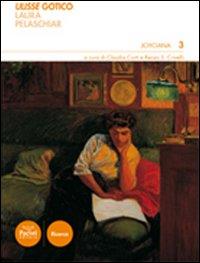
I testi joyciani costituiscono una sorta di cornucopia di stili e modi narrativi: il Gotico, inteso come "tendenza persistente" della letteratura della modernità, rappresenta senza dubbio una parte importante e finora inesplorata della vastissima gamma espressiva dell'autore di Ulysses.